


Competitive Analysis and Market Position Examples
Competitive reviews, category framing, and positioning recommendations teams can use across messaging, web, decks, and go-to-market work.
We help teams understand how the market is framed, where the category is crowded, and what they can credibly own. The work covers competitor analysis, category and buyer language, positioning gaps, whitespace, practical differentiation, and recommendations teams can use across messaging, websites, decks, and go-to-market priorities.
When clients need this
Clients usually need this when the market story feels crowded, borrowed, or too broad. Competitors may be making the same claims, buyers may be comparing against stronger or better-known alternatives, and the team may not yet have a clear, practical point of difference it can defend.
What I usually own
Competitive analysis and market review
Category and buyer language assessment
Positioning gaps and whitespace
Practical point of difference
Recommendations for message and market shifts
Direction teams can use across web, decks, sales, and GTM work
What clients get
A clearer view of how the market is framed
Stronger competitive and category position
More practical differentiation
Better alignment between market reality and messaging
Recommendations teams can actually use
RESULTS FROM RECENT CLIENTS
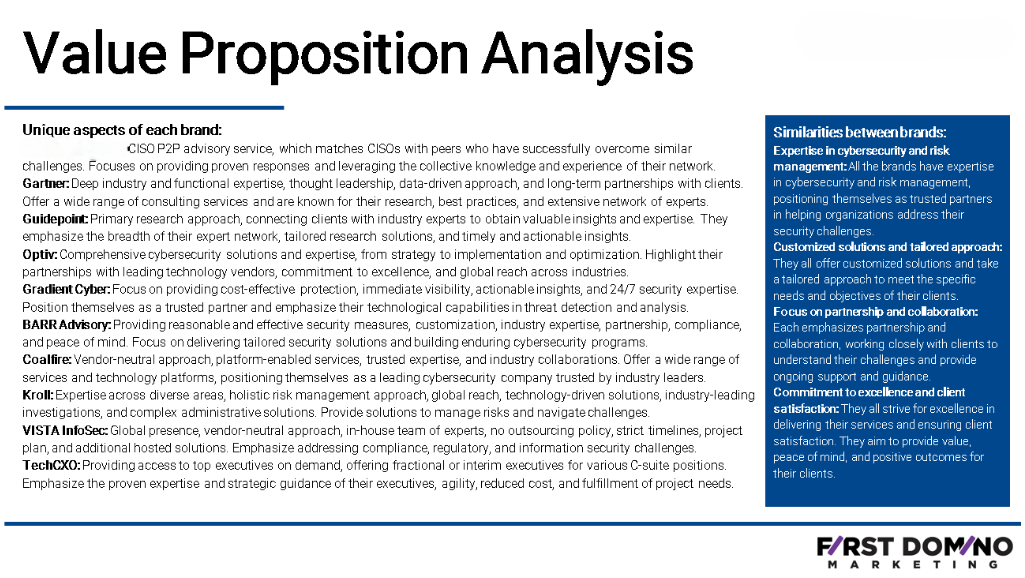
A peer-to-peer advisory business serving CISOs needed a clearer competitive position and a more distinct market story for a sophisticated B2B audience.
Reviewed the company’s positioning, keywords, and core metadata against 14 competitors, clarified how the offer was similar and different, and identified the brand attributes it could credibly own. Sharpened the market story around peer-to-peer knowledge sharing, practical guidance, and access to experienced CISOs.
The result was a more differentiated market position, clearer competitive language, and a stronger basis for messaging, web structure, and thought leadership.
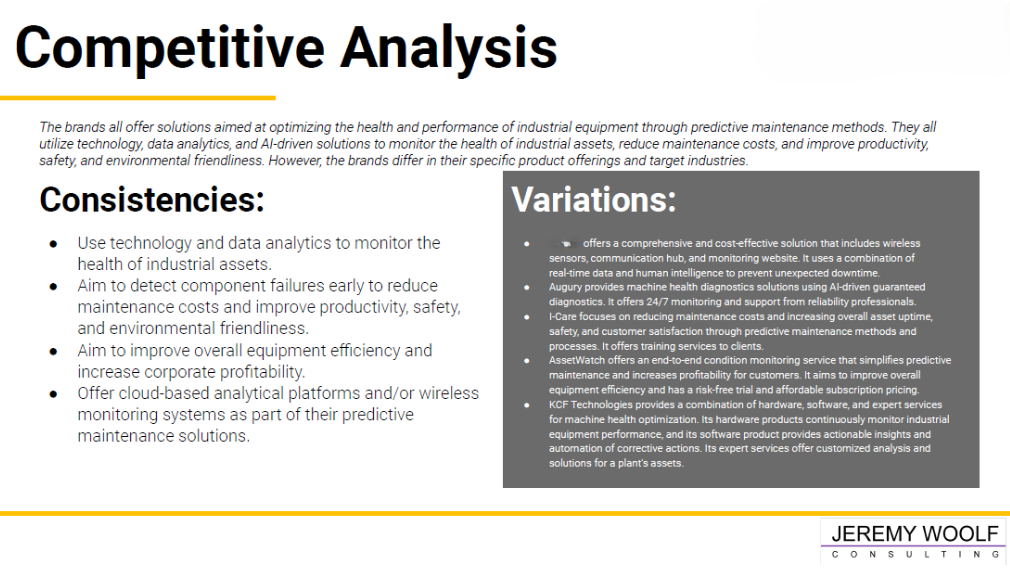
An industrial predictive maintenance company needed a clearer market position and a stronger point of difference in a crowded category.
Reviewed the company’s brand and product positioning, compared its claims and language to key competitors, and identified where the story was inconsistent or underplayed. Clarified what it should emphasize more strongly and how its positioning needed to align across channels.
The result was a clearer market position, stronger competitive framing, and a more practical basis for messaging and demand generation.
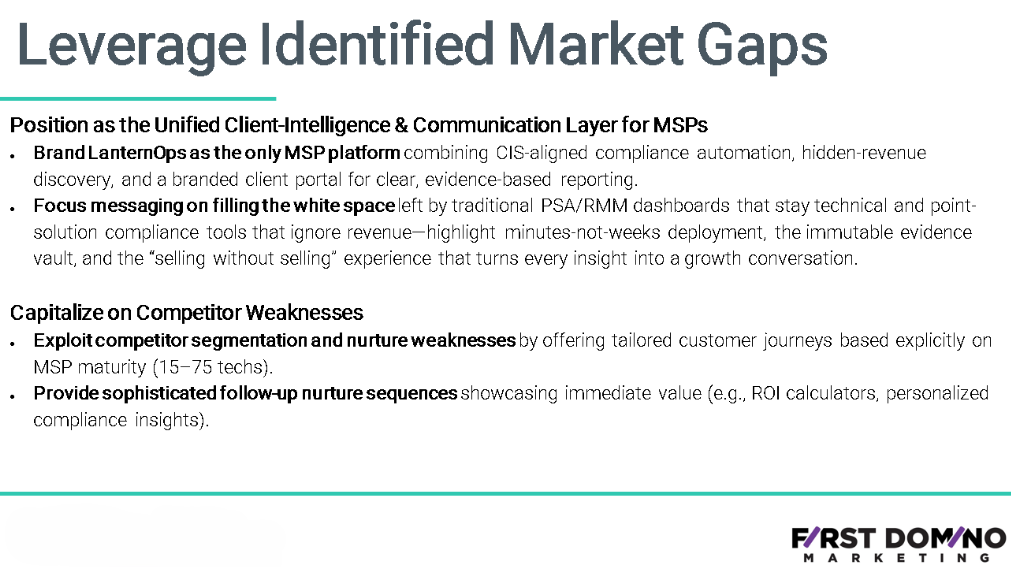
A managed IT and cybersecurity business developing a new MSP-focused offer needed a clearer category opening and a more practical way to stand apart.
Analyzed the competitive landscape across PSA, RMM, compliance, and client-engagement tools, identified where the market was crowded, and found usable white space around compliance, client communication, and PSA workflow. Translated that into recommendations on pricing, trials, onboarding, contract flexibility, and positioning.
The result was a clearer category opportunity, a sharper point of difference, and a stronger foundation for launch messaging and go-to-market choices.
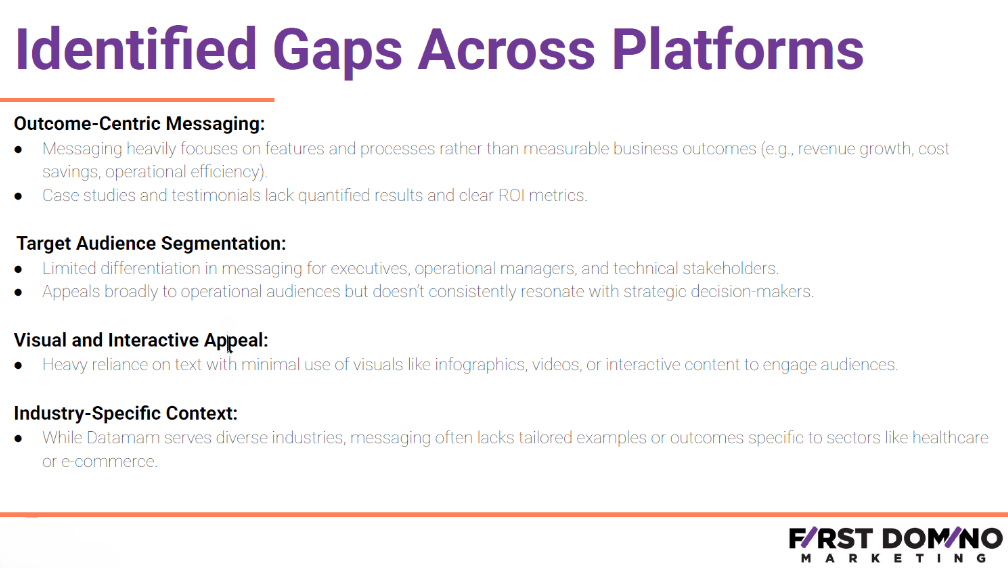
A data solutions company needed a stronger market position and a clearer way to move from technical process language to business value.
Audited messaging across website, sales, LinkedIn, and internal inputs, identified where the story leaned too heavily on technical execution, and clarified the shift needed toward outcome-led positioning, stronger audience segmentation, and broader strategic value.
The result was a clearer positioning direction, a stronger basis for differentiated messaging, and a more practical route to market-facing change.
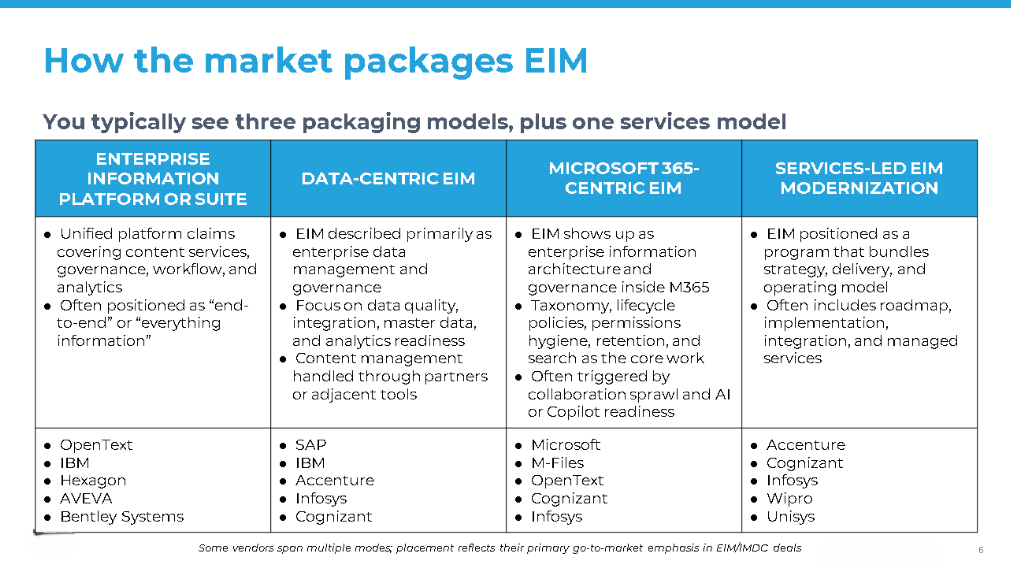
An enterprise IT services company needed a clearer way to frame Energy information management in buyer language and position itself competitively.
Reviewed how the market defines and packages EIM, mapped how Energy buyers actually buy related work, and clarified where the company could compete: not on generic single-source-of-truth claims, but on vendor-neutral, energy-grade execution across the client’s existing stack.
The result was a more practical category story, a clearer view of where the company could win, and stronger guidance for Energy GTM planning and external messaging.
HOW TO START
Specific project: A defined scope, a clear deliverable, a fixed timeline.
Short sprint: Fast work on a single competitive, category, or positioning problem, usually two to four weeks.
Ongoing support: Regular strategic support to keep the story aligned with market reality as the company grows.
Know the problem? I can usually point you to the right starting place quickly.
Still sorting it out? That’s fine. Figuring out where to begin is part of the work.